Category: Articles

  • Roulette System Reviews and Scam Warning

    Roulette System Reviews and Scam Warning

    Roulette System Reviews and Scam Warning. A warning about roulette system reviews, unreliable claims, and how to judge roulette computer or betting-system promises carefully.

    THE QUEEN v. STEVEN GEORGE HOURMOUZIS JAIL SENTENCE

    This is a link to an official court case document,
    From this we can see that Stefano Hourmouzis is not a scientist and researcher (except self-proclaimed) as he liked to present himself to the world, but someone who only managed to finish high school and decided to scam people for money.

    He pleaded guilty to posting false financial information on the Internet.” What he really did and how is better explained at

    http://www.nswscl.org.au/journal/44/Dawson.html

    Steven George Hourmozes Jailed

    Steven George Hourmozes Jailed

    On 30 October 2000, Steven George Hourmouzis was sentenced to two years imprisonment in relation to each of three crimes which he pleaded guilty to having committed by sending a fraudulent email to millions of people in Australia and overseas.

    Of the 2 year sentence, he was required to serve 3 months with a good behavior bond for the remainder of the term.The convictions resulted from spam sent by Mr Hourmouzis and an associate and from bulletin board messages posted by them which were designed to inflate the price of a NASDAQ listed corporation called Rentech Inc in which they had purchased shares.

    In May 1999, they sent in excess of three million emails messages to addresses in Australia, the United States and elsewhere. The messages were sent through an ISP from which Mr Hourmouzis had anonymously purchased internet access kits. He used Telstra telephone lines to connect with the ISP so as to avoid detection. Mr Hourmouzis relayed the messages through nine third party servers, which made the messages look to recipients as though they had emanated from those servers. Use of the third party mail servers in this way did not damage them but required them to be shut down in order to clear them of the messages. The businesses that used the servers also became concerned about the effect on their reputation as a result of the spam and that somebody had gained access to the servers.

    The spam and bulletin board messages achieved Mr Hourmouzis’s objective. Trading in the shares of Rentech Inc on the day following that on which the emails were sent was ten times the average daily trading volume. The share price doubled before trading was halted pending an announcement to be made by the Company. Rentech Inc issued a press release denying the statements in the email and bulletin board messages. Its share price then fell to below the price at which it had started.The first two counts to which Mr Hourmouzis pleaded guilty were of making statements or disseminating information that was:1. false in a material particular; and2. materially misleading and likely to induce the purchase of securities by other persons contrary to the Corporations Law.

    The maximum penalty for these offences is a $20,000 fine or imprisonment for five years or both. The third count to which he pleaded guilty is one which is of more general relevance to spammers. It was of committing an offence under sub-section 76E(c) of the Crimes Act 1914, which relevantly provides that:”a person who, by means of a facility operated or provided by the Commonwealth or by a carrier, intentionally and without authority or lawful excuse….interferes with, interrupts or obstructs the lawful use of a computer….is guilty of an offence. Penalty: Imprisonment for 10 years”. A bulk emailer that uses third party computer facilities to send very large quantities of unsolicited bulk email, knowing that to do so will cause an interruption to those facilities, risks being charged with an offence under section 76E.The sentence in the Hourmouzis case demonstrates that the penalties may be harsh. In that case, a custodial sentence was imposed notwithstanding that Mr Hourmouzis had cooperated with police, had pleaded guilty and had no prior convictions.

    That said, he was not helped by an email that he had sent to his associate which said: “This is illegal but I like it. Just don’t mention anything to anyone about anything until we purchase the stock and always keep our true identity very concealed.”

  • Roulette Computer IQE6 Diagram

    Roulette Computer IQE6 Diagram

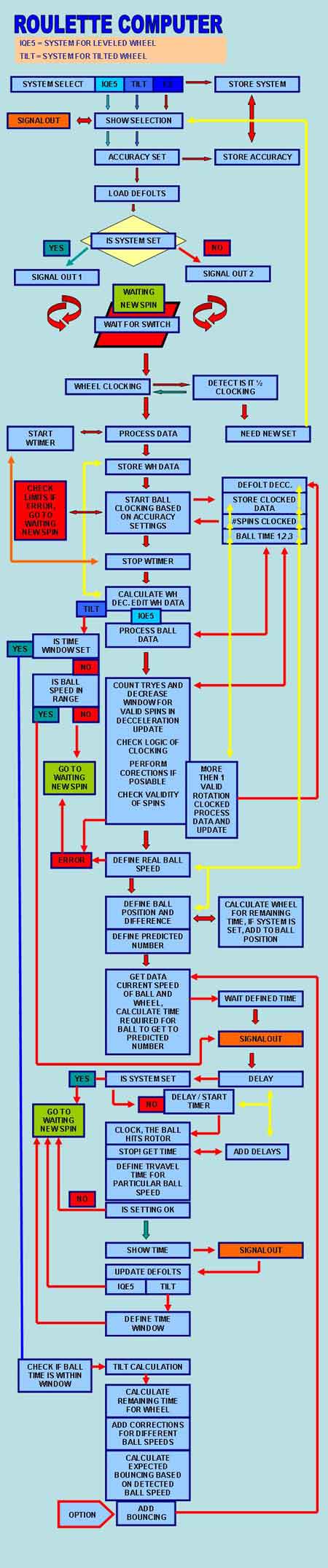
    Roulette Computer IQE6 Diagram. A short note on the IQE6 roulette computer diagram and related roulette prediction hardware concepts.

    Of course it is not truth that IQE6 is just a timer as explained at roulettesystemreviews site. Roulette system reviews site is only pretending to be an independent site,  reviewing roulette system. It is run by Steven Hourmouzes to discredit competition and to promote his scam.
    The IQE6 program runs complicated tasks and this picture displays some of processes happening during systems operation.
    Who is wrong or right only the time will tell.

  • Four Diamonds Roulette Computer Test

    Four Diamonds Roulette Computer Test

    Four Diamonds Roulette Computer Test. A Four Diamonds roulette computer test covering timing, wheel behaviour, prediction accuracy, and practical evaluation of results.

    In this article, I’ll explain how to test my roulette computer. The same test could be applied to any roulette prediction device, computer or system. For this test, you would need at least one roulette video spin. If you can play video spin on a DVD player, it would be better then using computers DVD, because the computer may create time delays in the video picture, which could make the test harder or inaccurate. I am using a DVD player with built-in the hard drive where I have stored roulette spins. The DVD player is handy with an option to repeat a single spin continuously, and that is what we need for this particular test.
    Four diamonds roulette computer test is a test to define how accurate the tested computer can predict according to measured known constant roulette wheel parameters.

    If the tested computer is a smart device as the FF roulette computer; that learns wheel parameters from spins we clock, it is good practice firstly to predict few different spins from same roulette wheel so that the system can learn from it and tet tuned for a particular wheel. If we have only a single spin then is good practice; the first few spins to clock the ball each time at a different place. It’s good to give the system a chance to learn how the ball decelerates at various points during the spin before then we start with the test.

    • With the FF roulette computer first four valid spins is a fast adjustment, and probably after a first spin or two, you will be set close enough to have prediction within few numbers of accuracy. With each spin, the system settings are closer to match parameters of the particular wheel. After four spins the system is definitely within working range and starts looking and defining differences in between one single rotation to get the best accuracy when predicting. Also, the system starts various controls so already learned data can not be easily disturbed by accidental bad clocking. For each additional spin, the system is fine-tuning and monitoring what is going on with the wheel then adjusting according to it.

    Roulette computer four diamonds test

    Run one spin and try to predict it 40 times.

    Every ten times use different diamond for clocking.

    Clocking at diamond 1

    Spin… Predicted number

    1. 18 this is first spin and system learns, the prediction is number 18

    2….12

    3…26 here system is close to adjusted

    4….26

    5….32 stable prediction

    6….32 it stays mostly within 3 numbers of accuracy

    7….26

    8….35

    9….26

    10….0

    Clocking at diamond 2

    Spin…Predicted number

    11….12 It is same here, the system is seated with first 4 spins

    12…..35; but here is fine-tuning for ball speeds at that range.

    13….. 0

    14….26

    15….26

    16…..32

    17…..32

    18….15

    19….35

    20….26

    We can continue to test it at any other diamond or position on the wheel.

    The good computer should detect ball speed correctly, eliminate human errors in clocking and predict according to measured ball speed. The narrower difference in between results means that the computer is more accurate. In this test, I actually used real data from testing FFZ’s IQE6 program.

    Video spins move pictures in time frames of 40ms therefore at some positions error may slightly increase. Clocking at the real wheel should be more accurate, but we need video spins so we can have constant input parameters and we can compare output results. Ideally, all predicted spins would generate the same outcome.

    At Rouletteplace.com we have few members who did this test on some other roulette computers available on the market, none of the computers could produce reasonable results that would be worth spending any additional time for further testing.

    MyRulet Four Diamonds Roulette Computer Test

    Created debate all over internet and bulletin boards. Firstly some people tried to deny it and to call it invalid. Of course, such claims do not have even basic grounds since the test is very simple and logical. If we repeat the same spin, trying to predict it with roulette computer, it is obvious that if the computer is accurate that it should produce same or closes to the same results. The test is designed to help the user to get an idea of the quality of the device they have and to not be manipulated. However, there is some misunderstanding or perhaps deliberate manipulations of the test. The FFZ is very specific roulette computer. For prediction, it doesn’t need to know rotor position but it predicts from the point where the last ball rotation was clocked therefore this test is enough for such a device.

    • It has been two years since this test has been published and no other computer seller could design proper algorithms for levelled roulette wheel prediction, therefore, no further tests were required. Recently some are trying to sell roulette computers with tilted wheel algorithms claiming that it can predict and levelled roulette wheel. Following is an update on the test.

    Roulette computers that have voice output (pronouncing numbers) from the moment we clock the rotor have to calculate rotor movement all the way from that point. To be able to predict particular number the computer has to know the rotor position at the time of prediction moment. The software can be manipulated so the computer actually can pass this test. So simple algorithms of tilted wheel prediction can be used with a preset wide time limit for the ball measurements and device may look as it can pass the test. Especially if rotor speed on video spin we use is slow.

    If such tested computer passes four diamonds test further testing to define if the computer is working with tilted wheel algorithms or if it is capable of predicting and levelled wheel. For this part of the test, we continue with the same roulette video spin.

    Tilted wheel algorithms explained

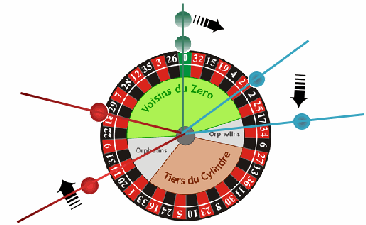
    We clock rotor at 12  o’clock.  Rotor moves (computer has to calculate movement). At the moment when we get particular ball speed rotor moved let’s say one rotation. So the system predicts let’s say number zero.

    We move the same test to 3 o’clock diamond. We do same, clock rotor, rotor moves, this time we are going to get prediction 1/4 of rotation later. For that time rotor moves only a few pockets extra and system still predicts the same number because with tilted wheel approach the system only calculates rotor movement which is not hard to calculate. Therefore the computer still may produce the same result.

    Test if the computer works with tilted or levelled wheel algorithms

    To differentiate if the computer, predicts as tilted or levelled wheel we need to do a bit more of testing.

    After DIAMOND 1 test we still clock rotor at 12 o ‘clock but now we clock the ball at 6 o’clock position, the system has to predict the opposite result. If the computer predicts the same or close to same, the computer works with tilted wheel algorithms. (Tilted wheel prediction groups a wide range of ball speeds and produces the same result. For example, clocked ball time of 1000 ms per rotation may produce the same result as clocked 1200 ms/r.)
    The computer needs to predict the opposite because the rotor is clocked at the same position, but we know that entered ball speed to the computer is by ½ rotations different. So if the computer is designed for levelled wheel and if it is accurate it must detect a change in ball speed, therefore it needs to predict differently.  (Until now only the FF roulette computer has such accuracy in ball timing to be able to do it)

    Some roulette computer sellers claim that computer they sell calculates a function for all moments during roulette spin. In such case previously explained tests should produce the same results in any targeted ball rotation we decide to predict (for example (4,5,6,7,8,9 … rotations before then ball drops). If the tested computer can’t do it then, of course, you are entitled to a refund. Testing in different ball rotations should be done even if the computer works on tilted wheel principles.

    The FFA roulette computer with IQE6 algorithms is the only computer designed to work on wheels without any dominant ball drop point. It all goes back to a time when some roulette computer sellers created a war in between each other arguing who has a bigger head. None of them did it properly, simply because they couldn’t. They do not use the right hardware capable of doing accurate time measurements. PDA’s and mobile phones programmed in Java are not timing devices.

    Question someone may ask could be, but can such computer based on tilted wheel calculation predict and roulette levelled wheel or semi tilted wheel?

    My answer is Yes; it can at least theoretically, if the computer is set on very tight limits for the ball timing and if the computer has reasonable algorithms for rotor calculation. In such a case, the computer may predict only abut 15% of spins. However such computer will not be able to predict at any time during the spin but it will predict only when the ball happens to be within the narrow ball speed limit. For example, a computer may be set to predict only if the ball is 1200 ms/r to 1230 ms/r (30ms time frame). It means that the operator will need to clock the ball until it comes to that particular speed range. In such case, many spins will not be predicted. In usual time difference in between rotations is about 200ms, therefore 30 ms preset time frame we will get only 30/200, 15% of spins predicted.
    For spins that we get predicted we know that the ball is within very narrow speed range and most likely it will hit the same diamond which may produce an advantage.
    With such an approach even if the ball is clocked with double errors, we still may get similar results, but of course, that is far from reality and needed accuracy for proper roulette levelled wheel prediction. Narrowing limits like that and getting 15 out of 100 spins predicted and claiming that the computer is capable of predicting each time when the ball will hit selected diamond is pointless. Especially when the test is done on semi tilted wheel where the particular diamond is getting more hits (meaning even 100ms wide ball speed range may still hit it). However, if the computer can do it accurately, and predict at any time during the spins that may be something. For example, we clock the balls 3-4 rotations and run 100 spins. We get accurately predicted 15 spins then we repeat the same test (without any adjustments) but this time we clock balls 3-4 rotations earlier in spin and still get same results and same spins predicted. Until now nobody could demonstrate it.

    Also with such approach player also needs to experiment with time limits.
    For example time window of 1200 ms/r to 1230 ms/r may on particular wheel catch ball speeds where the ball may be hitting high positions on the diamond, and some even pass it and go for another diamond. In such a case, the time limit must be blindly readjusted, and the player needs to repeat the same process.

    The main problem with such approach is that from 100 played spins we get only 15 spins predicted. It may take us 5 hours to get a hundred spins if we need to readjust the time frame it may take additional 5 hours just to see if it is adjusted properly.
    If parameters on the wheel change (as in usual) than it may take us additional 5 hours just to find out that we do not get accurate predictions.

    (Here I would like to highlight that manually adjusting time frame even for tilted wheel prediction is not the very practical solution. The FF roulette computer with TILT2 algorithms uses automated time frame set up based on measured parameters. It saves a lot of time, and predictions are more accurate.)

    From everything explained above it is clear that such design of roulette computer and claim that it can predict and levelled wheel is the more theoretical approach, an unpractical solution from someone who has no clue how to design proper algorithms for levelled wheel prediction. The FF roulette computer with IQE6 algorithms predicts every reasonable clocked spin because it has the hardware for proper time measurements and the program is designed for levelled wheel prediction.

    The test how good computer can eliminate errors in clocking

    For this test alternate clocking position, first rotation clock the ball at the diamond and next rotation do it 1-2 cm distanced. If you do it with a single click, it will produce an error of about nine numbers. But error correction should reduce it. Compare results with previous data and check if there is the difference and how much. IQE 6 is getting almost same data during this test. But also important it that if entered errors are too large the computer will protect the player from wrong prediction, and it will call clocking error.

    Roulette rotor calculation tests

    Still, we can use same video spin. Up to now you already should know what predicted the outcome is. Next is to check how much that prediction will change by giving to system different rotor time. So repeat spin clocking but when clocking rotor start when the ball is at clocking diamond but stop it 5 -10 cm earlier or later. You give to computer data that rotor is faster / slower. Of course, prediction should move according to different rotor speed clocked.

    If your last click is earlier, then the system should predict further in ball direction. This is an only approximate test, but the change should be close enough.

    FFZ uses detected ball and rotor speed when displaying result; therefore it will not show a 100% accurate result. A simulation that wheel is faster will show a bit less than real rotor change, and for the slower wheel, it would show more.

    With tests explained we can have a general idea about system ability to define failing point of the ball. Of course, that is not a final prediction.

    How accurate is this failing point in relationship to final result it depends on many additional factors such as:

    How far in time are we from the point when the ball hits the rotor.

    Imperfections on the wheel, deformations on ball track, the slight tilt may have various effects on ball travelling time, kind of ball, number of diamonds etc. With later prediction, we are more accurate, but we have less time to place chips.

    IQE6 tested on different spins with high accuracy setting have all results within same or close to the same distance from prediction.

    Roulette ball bouncing

    This part is individual for every wheel/ball combination.

    Because of that no matter how good we predict the game is still partly random.

    Sometimes it works for us sometimes against, and we should look for an average.

    The task of every advanced player is to have a good way of prediction but also to search where that advantage may be the highest.

    For the end, if you have the opportunity to look computer in action as sellers demonstration. Never look final result it could be coincidence or video editing.

    Simply compare distances from predicted number to number where the ball hits the rotor.

    Example

    If the computer is good, and prediction is zero, then the ball hits rotor at number 18.

    Next spin, whatever prediction is the ball should hit same distance from that number as it did from zero to number 18. Sure few spins could be out of that, but most of them should have the same distance.


  • Roulette Tilt1 to Tilt2 Programs

    Roulette Tilt1 to Tilt2 Programs

    Roulette Tilt1 to Tilt2 Programs. Notes on Roulette Tilt1 and Tilt2 programs, wheel tilt ideas, prediction software, and roulette advantage-play development.

    Hello, friends and roulette lovers. With this article, I would like to provide some news from Roulette Place forum and to wish you a happy and prosperous New Year. It’s been a long time since I stopped selling systems, many of you know reasons, and for many, it is not important at all. I ended trading systems, but I did not stop developing.

    As the final product comes to my device which people start calling Forest Fib, so let it be FF. The FF consists of 3 fully developed systems for any advanced player needs.E2 is my first system which is explained in details at my forum site. That is a very limited system as most of you already know, E2 requires specific conditions and skills.

    Next system is TILT 2, and I will explain it in some more details. Of course, it is designed to take advantage of the tilted wheel. It is an upgrade of the tilt1 system. So what was wrong with TILT1? Nothing was wrong except practicability. Who used it he can understand why. The difference is that TILT2 system does not have all those confusing signals which are hard to follow during the game. Tilt 2 is a self-adjusting system, therefore, does not predict spins where the ball is not going towards the dominant diamond. Only some spins are playable but with higher hit rate, and the system does not require so much of focusing to game as the previous version. IQE6 system is designed for the levelled wheel. It is a state of the art design. Using this system on the levelled wheel is almost as pointing the laser to get 100% accurate ball timing then combine that data with wheel speed data and define the final result. I will explain the process of developing such an accurate device.

    The first try was E5, which includes some new great ideas in roulette prediction and I would give credit to solution how to reduce human errors in a change of delay time during ball clocking. It worked fine, but it did not perform so well on different roulette tables even wheel, and the ball was the same kind. Next step was IQE5 which developed in few steps. IQ would stand for the intelligent system, where the system is active and learns wheel specification. The breaking point comes with a solution of analysing ball deceleration time, which constantly changing from wheel to wheel but also during the same spin even within a single rotation. The system received a wider range of usage so that it can play rotor speeds from 2 to 10.5 sec., ½ rotors clocking, and it starts using the calculation for rotor deceleration. Yes, it works fine, so why next step. Simply because it can be better, I am the one who is playing and one who is listening to what the others are saying. New ideas and better solutions coming on weekly bases. Some ideas were not as good as they look at the first moment. A lot of testing at home and in a real environment decides what the best solution is. And that is how I or maybe I better say we, come to a point where we are now. IQE6 most important change is accuracy setting. It comes as feedback and requirement from European players.

    If here I can not place very late bets they can, therefore there is no reason why someone wouldn’t benefit from that. Some people simply are so much dedicated to the game that they search the world for the best conditions when they find it they play and when they play they play table limits. Adding those changes was much harder then what I was expecting; it required additional changes in the configuration of ball deceleration so it can cover different deceleration changes and different time frames. Finally, everything is completed. If I read all of this, I would have in mind only one question. So how good it is? It is hard to explain, but I can give you an idea. The system has three levels of accuracy, if I use level 3, then I get the earliest possible prediction, and based on rotor time input and ball detected speed the system from 10 tries seven times produces a result within three numbers of accuracy. The other 3 are around five numbers.

  • Roulette Prediction Basic Theory

    Roulette Prediction Basic Theory

    Roulette Prediction Basic Theory. Basic roulette prediction theory covering rotor speed, ball timing, wheel behaviour, and how roulette computers estimate likely sectors.

    Why roulette wheel is predictable?

    For a start, I want you to think about this:

    Cyclist

    Cyclist

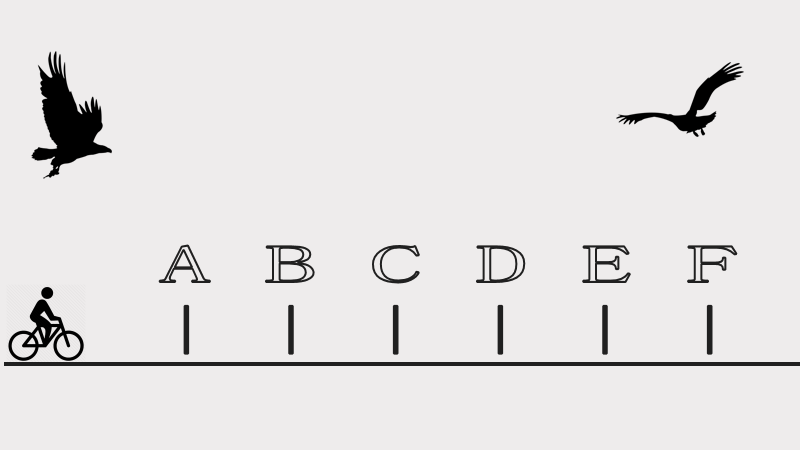
    You are the cyclist in this picture. Your speed is 20km/h at the point A. Then you stop pedalling and keep rolling towards the point D where your bike stops. Next time at point A you have a speed of 30km/h, and you stop pedalling. This time your bike continues passes point D moving towards the point F and stops there. The question is what would happen if at the point A you were at the speed of 25km/h? At what point will your bike come to a stop: B, C, D, E or F?

    The bike should stop at point E. In such a case, it would be logical to place bets around point E. The same principle applies to the roulette wheel and the ball and its final position. It is more complicated than the pushbike example because here we have two objects that are moving in opposite directions with possible variations in speed.

    If we at a particular time take samples of the ball and rotor speeds, those samples can help us to determine the final position by time. When we take time samples, we can relate them to previous measurements.

    If we apply a few processes, we can easily predict where the ball will stop. The reason why we can’t be 100% certain in predicting where the ball will end is because of the ball bounce scatter but of course and because of some imperfections on the ball and the ball track.

    The ball sometimes bounces in unpredictable ways, but it is not entirely random. Of course, it depends on the roulette wheel type and ball used, but often it takes about 50% of a total of 100% accuracy.

    Let’s imagine that you are playing roulette and visually predicting the section of the wheel where the ball will finish. Of course, you can’t be perfect. If you are only accurate about 33% of the time then one-third of the time the ball will stop on one of your eight numbers. What will be your position after playing 30 spins? You will place on the table 30 spins x 8 chips = 240 chips.

    Because of your inaccuracy in calculating the correct sector and the fact that the ball may bounce and scatter, you will only hit your played sector 10 times out of 30 spins. So you would win 10 spins x 35 + 10 chips (stake) = 360 chips. So you will be in profit of 120 units, not so bad for about one hour of play.

    A decent roulette visual tracking strategy gives an advantage of about 6% over the house. By carefully selecting the croupier, the table, the wheel and the ball I sometimes manage to make a profit of $5000 in one hour. It is achievable because after winning a few spins at the start I increase bet size.

    Learn the strategy, and for you, the game will never be just a random win or a game of luck.

    Luck and Roulette

    Luck is still a significant factor in this game of roulette. After years of playing, I consider myself a reasonably experienced player. Sometimes my results are affected by luck, sometimes good luck occasionally bad luck.

    I remember one time I lost, and I was continually predicting the winning sector. The ball would stop one or two numbers on sides of my predicted numbers, or it would stop on a number which I had missed to place the bet. After a while, I made adjustments to my playing sector, but then the ball would hit the other end of my sector and so on.

    However, I also remember playing with a new Croupier from the USA. In 20 spins, 18 times the speed of the wheel was consistent, and the ball speed from the start was similar. With similar spins, it was easier to win. Within 60 minutes my money multiplied by a factor of 100. Then the Casino changed the Croupier, I found him later on another table, but when I began to play, he started changing the wheel and ball speed. I struck up a conversation with him, and he told me that he was instructed by the Casino Supervisors to do this.

    I am not a gambler so why do I gamble?

    It all started 20 years ago in my little hometown in the Communist country of Yugoslavia.

    So, the prominent communists opened up a small casino, only two roulette tables, and in my little town, the people were losing money that they were working so hard to earn.

    And I was one of those people. At that time I was 20 years old and employed as a telecommunications technical officer and earning $400 – $500 per month.

    Occasionally I would go to that little casino with my friends after coming back from nightclubs. We would lose all our money there.

    Then once I was on holiday, and in another little casino I met an older man, and he gave me some tips on how to play. ( I will pass that FREE tip on to you shortly.)

    After I started using his way of playing I noticed that I was winning $50-$100 every night. That was good money for me as I was only earning was about $400 a month and at that time and place a bottle of brandy cost me $5 or a pack of cigarettes $1.

    It lasted for about two months. The Casino was located in the basement of the city’s hotel. That year the water level of the river was so high that underground water flooded into the casino. It was the end of that little casino.

    Soon after that, I migrated to Australia where I still live. Here I did not gamble for ten years. I finished more schooling and study and worked for nine years as an Electronics Engineer for a large Telecommunications Company.

    Then globalization came. All manufacturing was shifted to Asia. As a result of that, I was given the opportunity to take a redundancy package, quite a large sum of money and the opportunity to start my own business. Starting in business by myself was hard. How do I keep the standard of lifestyle as it was before? We are a family with two kids and a dog.

    So the same story again. One night I went to the Casino with my friends. I played the same way as the old man back in the little casino had told me and I won $600, and a few nights later another $1300 then $900. Then I start losing, then winning than losing and so on. I realised that this is not the same as back in that little Casino and I started using my engineering diagnostic skills to figure out what’s going on? What is the difference and what can I do? Of all the games in the Casino, I play only roulette because I could not see how I can have an advantage in the other Casino games but I believed it was possible with this game!

    How Did I Play? (Your FREE tip)

    The old man told me to look at the reference number under the Croupier’s hand at the point they release the ball. Compare how far from that number on the wheel is to the final number in which the ball stops. After a few measurements, define the angle and always place the bets from the reference number shifted by the same angle.

    Example: For easy understanding lets consider the roulette wheel as a circle divided into 12 numbers like a clock. Do not forget that the ball is usually spun once clockwise and the next time counter-clockwise. If the croupier releases the ball clockwise from above the 2 o’clock point and ball stops in the six o’clock pocket, this means there are four hours difference to the right or clockwise. So if next time Croupier spins clockwise releasing the ball from above the six o’clock on the rotor the ball is expected to stop at the ten o’clock position.

    For this kind of play to be successful you need to find croupier with consistent spins who has developed a rhythm. But that’s not all. Later on, I realised that the advantage achieved by playing in this way is possible only if the wheel is tilted. That is if the ball speeds up when it runs down one side of the wheel and then slows down as it goes up the other side of the wheel and drops off the track consistently striking the same few diamonds or deflectors above the number ring and pockets.

    It is called Dealers Signature you should spend some time reading forum articles:

    Evolution of roulettes advantage play

    Understanding roulette wheel and exploiting possibilities

    Big Casino versus Little Casino

    It took me a while to figure out why I was always winning in the small Casino and only sometimes in this big one. The way I was playing is called taking advantage of a Croupiers signature. The theory is that a ball will be thrown with the same force so it will spin the same number of spins and should stop the same number of pockets away from last spin release point.

    In the small Casino, the gambling industry was new, and Croupiers didn’t know about this flaw. They were spinning and spinning consistently. And they never levelled wheels or even checked the level. The Government-owned the Casino, and no one cared.

    In the big Casinos, croupiers are trained to notice smart players and how to counteract them. So they deliberately change wheel and ball speeds, and these days most Casinos are checking the level of wheels on daily bases, and they even move the wheels from table to table or rotate the adjustable number ring, so it is not adjacent to the same actual pocket as it was said last week.

    My first challenge to win at roulette whenever I played was to study Croupiers. Some are good and some spin too fast and inconsistent. While I study them, they also studied me and began to remember me as the guy who was consistently winning. So they had to change their spinning technique every time I came to play at their wheel. My only option was to wait for a new Croupier and then play fast until they noticed me winning or a Supervisor would come and tell the Croupier to change the intensity and consistency of their ball spin and speed of the wheel.

    During that period of play which lasted about three years, I played and improved the old man’s roulette strategy four times. I began to do some calculations and found that very small variations in speed make a big difference for the result.

    It’s like this: One roulette game example;

    Number of ball turns around the wheel = 20

    Number, the wheel rotates around the centre = 8

    Because they are in opposite directions, we can add them. It means that ball will pass this many pockets, 37 x 28 = 1036.

    That is a long distance.

    If the ball gets just a fraction more power at the start that may result in the ball ending up on the opposite side of the wheel.

    My challenge was to find a way to detect that change in speed and calculate necessary adjustments. It took me four years to come to this level, and at that time I improved my way of playing a lot.

    There are two main approaches to predict where the ball would stop.

    One way is legal and is developed by visually tracking the ball and predicting where it would stop. It gives me a small advantage over the Casino. The other way is illegal in most Countries and includes the use of a specially designed electronic device. It is a more accurate way and can produce a greater advantage over the Casino.

    All this is based on my skills on how to use the device and on the data I’ve collected in recent times. As I said, it took me four years of intensive thinking and experimenting to develop a system that is so balanced.

    Why the system works as it works would be hard to understand for most ordinary people. The user needs to understand the details to be able to best use it. It’s the same as for a not technical person to understand how only three colours red, green and blue can make so many different colours on a TV screen including white and black. Most people are only happy to use TV.

    With supporting documents and a graphical presentation and simulation, it should not be any problem to learn how to best use the device.